Table of Contents
- Why Do Exclusion Notes Exist?
- Excludes1 — "NOT Coded Here" (Mutually Exclusive)
- Excludes2 — "Not Included Here" (Can Coexist)
- Side-by-Side Comparison
- The Exception to the Excludes1 Rule
- Excludes Notes Appear at Different Hierarchy Levels
- Applying Both Note Types in the Same Category
- Other Important Instructional Notes
- How the CPC Exam Tests Excludes Notes
- Frequently Asked Questions
Excludes notes are instructional notes in the ICD-10-CM Tabular List that tell coders when two codes can or cannot be used together. There are two types — Excludes1 and Excludes2 — and they mean very different things. Confusing them is one of the most common coding errors, and the CPC exam tests the distinction directly. If you can reliably tell the difference between Excludes1 and Excludes2 and apply each rule correctly, you will answer these questions faster and with more confidence than most candidates.
This guide covers both types of Excludes notes with real ICD-10-CM examples, walks through the important exception to the Excludes1 rule, and explains how the CPC exam tests these concepts. For the broader context of ICD-10-CM coding rules, see the ICD-10-CM Official Coding Guidelines.
Why Do Exclusion Notes Exist?
The ICD-10-CM code set contains over 72,000 codes. Many conditions overlap, share symptoms, or exist in related categories. Without exclusion notes, coders would have no guidance on which codes can or cannot coexist on the same claim. The result would be contradictory claims (coding both active disease and disease in remission), redundant claims (coding a condition twice in different categories), and inaccurate clinical pictures.
Excludes notes provide the rules that prevent these problems. They are printed directly in the Tabular List under the relevant code or category, and they are binding — ignoring them is a coding error.
Excludes1 — “NOT Coded Here” (Mutually Exclusive)
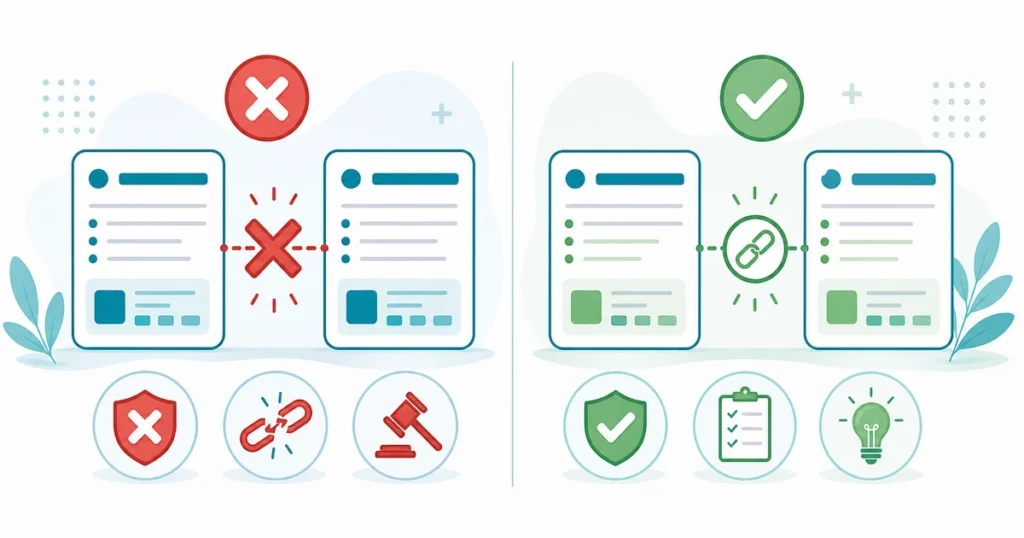
An Excludes1 note means the code above it and the excluded code are mutually exclusive — they cannot occur together in the same patient at the same time. The Excludes1 note says: “this condition and the excluded condition cannot reasonably exist simultaneously.”
What the Excludes1 Note Looks Like
In the Tabular List, an Excludes1 note appears under a code or category header with the label “Excludes1:” followed by a list of excluded codes or categories.
Real Examples of Excludes1
Example 1: Diabetes in remission vs active diabetes
Under category E08–E13 (Diabetes mellitus), the code for diabetes “in remission” (such as E11.65 — Type 2 diabetes with hyperglycemia) has an Excludes1 relationship with certain other diabetes codes. A patient cannot have active diabetes with hyperglycemia and diabetes in remission simultaneously — the conditions are mutually exclusive.
Example 2: Acute vs chronic conditions
Under J20 (Acute bronchitis), there is an Excludes1 note for J41 (Simple chronic bronchitis). A patient cannot have both acute bronchitis and simple chronic bronchitis coded at the same time in certain contexts — the Excludes1 note indicates these are mutually exclusive classifications.
Example 3: Congenital vs acquired
Under Q65 (Congenital deformities of hip), there is an Excludes1 note for M16 (Osteoarthritis of hip). A congenital hip deformity code and an acquired osteoarthritis code in the same category cannot both be assigned for the same hip condition — the etiology is either congenital or acquired, not both.
The Rule in Practice
When you encounter an Excludes1 note, you have two options:
- Code the condition that is actually present. If the patient has the excluded condition rather than the condition listed in the category, code the excluded condition instead.
- Never code both simultaneously. Assigning both codes on the same encounter is a coding error.
Excludes2 — “Not Included Here” (Can Coexist)
An Excludes2 note means the excluded condition is not part of the code or category where the note appears, but the patient can have both conditions at the same time. Both codes can be assigned if both conditions are documented.
What the Excludes2 Note Looks Like
The format is the same as Excludes1 — it appears under a code or category with “Excludes2:” followed by excluded codes. The critical difference is in meaning, not formatting.
Real Examples of Excludes2
Example 1: COPD and asthma
Under J44 (Other chronic obstructive pulmonary disease), there is an Excludes2 note for J45 (Asthma). This means COPD (J44) does not include asthma — they are separate conditions, a patient can have both COPD and asthma, and if the patient has both documented, code both J44.- and J45.-
Example 2: Osteoporosis and pathological fracture
Under M80 (Osteoporosis with current pathological fracture), there is an Excludes2 note for M81 (Osteoporosis without current pathological fracture). These are not the same code — one includes a fracture and the other does not — but a patient could have osteoporosis with a pathological fracture at one site (coded with M80) and osteoporosis without fracture documented at another context.
Example 3: Anxiety and depression
Under F41 (Other anxiety disorders), there is an Excludes2 note for F32 (Depressive episode) and F33 (Recurrent depressive disorder). A patient can have both an anxiety disorder and depression — they commonly coexist. Code both when both are documented and managed.
The Rule in Practice
When you encounter an Excludes2 note: The excluded condition is not part of the current code. The code you are looking at does not include the excluded condition within its definition. If the patient has both, code both. Assign separate codes for each documented condition. The Excludes2 note is informational. It tells you where to find the code for the excluded condition — it does not prohibit coding both.
Side-by-Side Comparison
| Feature | Excludes1 | Excludes2 |
|---|---|---|
| Meaning | “NOT coded here” — mutually exclusive | “Not included here” — separate but can coexist |
| Can both codes be assigned? | No — never on the same encounter | Yes — if both conditions are documented |
| Why the note exists | The two conditions cannot logically coexist | The excluded condition is defined elsewhere in the code set |
| Action when you see it | Choose one code or the other | Code both if both conditions exist |
| Memory aid | “1” = “one or the other, never both” | “2” = “two codes are okay together” |
The memory aid in the last row is a popular trick: Excludes1 = pick one. Excludes2 = you can use two.
The Exception to the Excludes1 Rule
There is one important exception to the Excludes1 rule that the CPC exam has tested. The ICD-10-CM guidelines state that when two conditions classified as mutually exclusive by an Excludes1 note are both documented by the physician and confirmed to coexist, both codes may be assigned. This exception is rare and should only be applied when the physician explicitly documents that the patient has both conditions simultaneously.
Example: If a physician documents that a patient has both type 1 and type 2 diabetes (an extremely rare but documented clinical scenario), the coder would assign both codes despite the Excludes1 note, because the physician has confirmed both conditions exist. In practice, this exception is almost never applied — but knowing it exists prevents you from eliminating a correct answer on the CPC exam solely because of an Excludes1 note.
Important: This exception does not mean you can ignore Excludes1 notes routinely. It means that physician documentation overrides the note in rare cases where both conditions are explicitly confirmed.
Excludes Notes Appear at Different Hierarchy Levels
An important detail that trips up new coders is that Excludes notes can appear at several different levels of the ICD-10-CM hierarchy — the chapter level, the block or section level, the category level, or the individual code level — and a note’s placement determines how broadly it applies. A chapter-level Excludes note applies to every code within that entire chapter, a block-level note applies to a range of related categories, a category-level note applies to every code within that three-character category, and a code-level note applies only to that specific code. When researching whether two conditions can be coded together, check for Excludes notes at every level above the specific code you are considering, not just at the code itself, since a broader note higher in the hierarchy still governs even if no note appears at the specific code level.
Applying Both Note Types in the Same Category
Categories frequently contain both Excludes1 and Excludes2 notes simultaneously, each referring to different excluded conditions, and coders must evaluate each note independently rather than assuming a category is governed by only one exclusion type. For example, a single respiratory condition category might have an Excludes1 note ruling out one mutually exclusive condition while also carrying an Excludes2 note confirming that a different, commonly coexisting condition may be coded separately. Reading every instructional note listed under a category, rather than stopping after finding the first Excludes note, is necessary to catch all of the coding restrictions and allowances that apply.
Other Important Instructional Notes
While Excludes notes are the most frequently tested, the ICD-10-CM Tabular List contains other instructional notes you should know:
Includes Notes
An “Includes” note appears under a category to clarify what conditions are covered by that category. It lists additional terms or conditions considered part of the category even if not explicitly named in the code titles.
Inclusion Terms
Listed under specific codes, inclusion terms are diagnoses or synonyms that are classified to that code. If the physician documents a term listed as an inclusion term, you assign that code.
“Code First” and “Use Additional Code”
These sequencing instructions tell you the required order when two codes must be reported together. “Code first” means another code should precede the current code. “Use additional code” means an additional code should follow. See ICD-10-CM sequencing rules for full details.
“Code Also”
Unlike “Code first” / “Use additional code,” a “Code also” instruction does not specify sequencing. It simply tells you that an additional code may be needed — either code can be sequenced first depending on the circumstances.
How the CPC Exam Tests Excludes Notes
Pattern 1: “Can These Be Coded Together?”
The question presents two conditions and asks whether both codes can be assigned. If an Excludes1 note exists between them, the answer is no (with the rare exception). If an Excludes2 note exists, the answer is yes when both are documented.
Pattern 2: Selecting the Correct Code
The question presents a clinical scenario where the correct answer depends on understanding which code category to use. The wrong answer is a code from a category that has an Excludes1 note for the documented condition. The correct answer is the code from the category where the condition actually belongs.
Pattern 3: Multiple Code Assignment
The scenario documents two coexisting conditions that have an Excludes2 relationship. One answer choice includes both codes (correct); another includes only one code (incorrect, because the Excludes2 note confirms both can be assigned).
Pattern 4: The Exception Question
The scenario presents a rare situation where two Excludes1-related conditions are both documented as confirmed by the physician. The correct answer assigns both codes, testing whether you know the exception.
CPC Exam Tip: When you see an Excludes note question, your first job is to identify whether it is Excludes1 or Excludes2. Open your ICD-10-CM manual to the relevant code and read the note type. The answer follows directly from the note type in nearly every case.
For study preparation strategies, see the CPC Exam Study Guide and CPC Exam Cheat Sheet.
5 quick questions drawn from this guide. Click an answer to check it — explanations appear as you go.
1. An Excludes1 note under a code means the excluded condition:
2. An Excludes2 note means the excluded condition:
3. When MAY two codes linked by an Excludes1 note be reported together?
4. R56.9 (unspecified convulsions) carries an Excludes1 for epileptic convulsions. A patient has documented epilepsy (G40.909). You should:
5. An Excludes note printed at the beginning of a three-character category applies to:
Frequently Asked Questions
What is an Excludes1 note in ICD-10-CM?
An Excludes1 note means the two conditions listed are mutually exclusive — they cannot be coded together on the same encounter. If the patient has the excluded condition, code that condition instead of the code where the Excludes1 note appears. Think of Excludes1 as “pick one or the other, never both.”
What is an Excludes2 note in ICD-10-CM?
An Excludes2 note means the excluded condition is not included in the code but can coexist with it. If the patient has both conditions documented, you assign separate codes for each. Think of Excludes2 as “two codes are okay together.”
How can I remember the difference between Excludes1 and Excludes2?
Use this memory aid: Excludes1 — the “1” means pick ONE code or the other, never both. Excludes2 — the “2” means TWO codes are acceptable together. Excludes1 is mutually exclusive; Excludes2 allows both codes when both conditions are documented.
Is there ever an exception to the Excludes1 rule?
Yes. The ICD-10-CM guidelines state that when a physician explicitly documents that a patient has both conditions despite an Excludes1 note, both codes may be assigned. This exception is rare and applies only when the physician has confirmed both conditions coexist. It does not allow routine disregard of Excludes1 notes.
Where do I find Excludes notes in the ICD-10-CM manual?
Excludes notes are printed in the Tabular List directly under the relevant code or category heading. They appear before the code descriptions and are labeled “Excludes1:” or “Excludes2:” followed by the excluded codes. They do not appear in the Alphabetic Index — you can only see them when you verify a code in the Tabular List.